


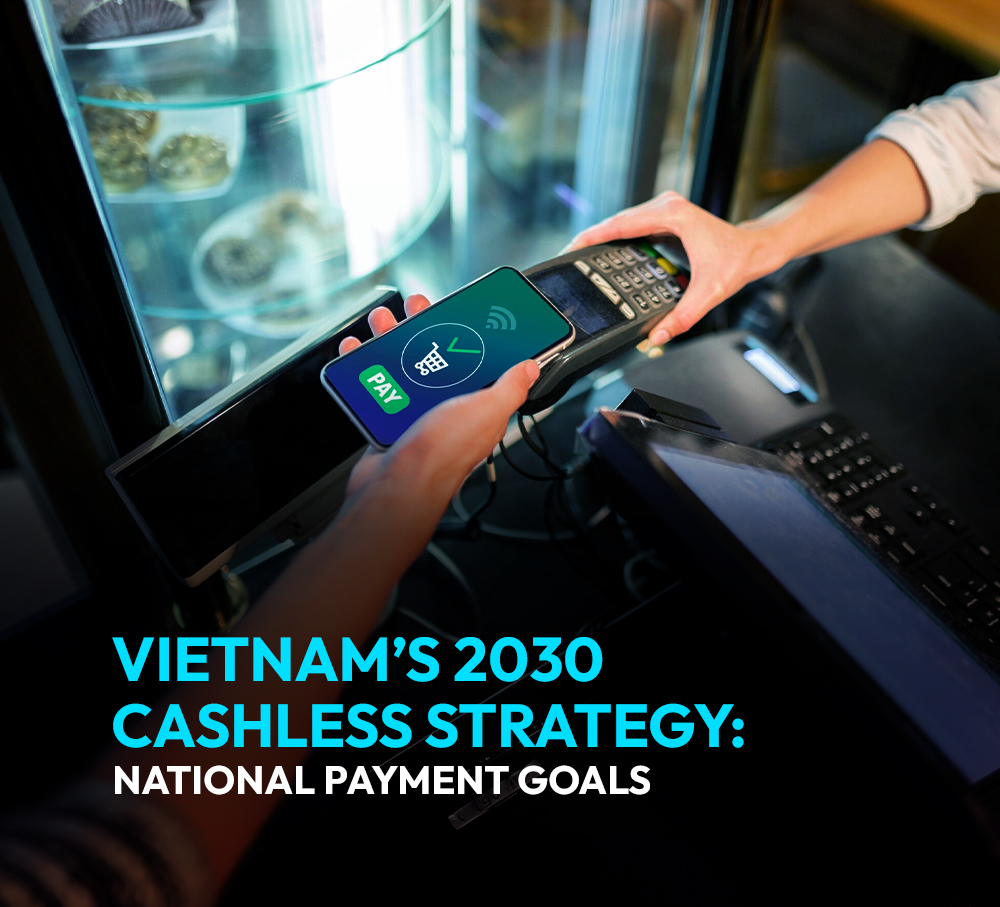
Vietnam’s financial system is undergoing a major transition as policymakers push toward a nationwide cashless economy by 2030. The country’s National Payment Strategy outlines clear milestones aimed at expanding digital payments, improving financial access, and strengthening transaction transparency across sectors. Rapid smartphone penetration, strong fintech activity, and government-backed digital transformation initiatives are accelerating adoption. According to the State Bank of Vietnam, digital transactions have grown at double-digit rates in recent years, supported by mobile banking and QR payment infrastructure. These developments are also drawing international attention through platforms such as global fintech expo gatherings and the largest fintech exhibition forums where policymakers and technology leaders discuss the future of financial ecosystems.
Vietnam’s Cashless Ambition: Policy Meets Market Momentum
Vietnam’s national strategy for digital finance has gained momentum through coordinated policy and market activity. The government’s National Digital Transformation Programme identifies digital payments as a core pillar of economic modernization.
The State Bank of Vietnam has promoted QR interoperability standards, allowing payment platforms and banks to operate within a unified ecosystem. This policy ensures that consumers can use different banking apps or wallets to complete payments through a single QR infrastructure. At the same time, the expansion of electronic Know-Your-Customer (e-KYC) procedures enables financial institutions to onboard customers remotely without visiting a branch.
Market indicators show rapid adoption:
- Digital payments have increased significantly, with more than 70% of adults using electronic payment channels in urban areas.
- Vietnam’s e-commerce market surpassed USD 20 billion, and most online purchases are now paid digitally.
- Mobile wallets such as MoMo, ZaloPay, and VNPay have expanded services to transportation, retail, and public services.
However, adoption gaps remain between cities and rural regions. Urban centers report high digital payment activity, while rural communities still rely heavily on cash transactions. Addressing this divide remains a central objective of Vietnam’s payment strategy.
Global industry discussions, including those held at a banking technology exhibition or fintech exhibition, increasingly highlight Vietnam as one of Southeast Asia’s fastest-growing digital finance markets.
Digital Identity as the Backbone of Financial Trust
Digital identity infrastructure plays a central role in supporting Vietnam’s cashless goals. Reliable identity verification systems allow banks and fintech platforms to verify customers securely while minimizing operational friction.
Technologies such as biometric authentication, facial recognition, and digital ID integration enable remote onboarding for financial services. Through e-KYC systems connected to national identity databases, institutions can verify users within minutes rather than days.
Key improvements reported by financial institutions include:
- Account opening time reduced from several days to under 10 minutes through digital onboarding tools.
- Fraud losses reduced by up to 30% in certain digital channels due to stronger identity verification processes.
- Vietnam’s national population database has already digitized records for over 90 million citizens, supporting identity-based financial services.
These systems also strengthen regulatory oversight. Automated compliance checks allow banks to detect suspicious transactions and meet anti-money laundering requirements more efficiently.
For underserved populations, digital identity can remove long-standing barriers to financial participation. Individuals without traditional banking history can access accounts and digital payment services using verified national identification credentials.
How Digital Identity Enables Vietnam’s Global Financial Positioning
Beyond domestic payments, digital identity infrastructure can strengthen Vietnam’s position within the regional financial network. Reliable digital identity frameworks support cross-border payment verification, allowing financial institutions to authenticate users quickly during international transactions. This capability becomes increasingly important as Vietnam expands its role in digital trade and regional supply chains.
For global investors and multinational corporations, transparent identity verification processes improve regulatory confidence. Compliance reporting becomes easier when financial institutions can verify transaction participants through standardized digital identification systems.
Vietnam is also aligning with ASEAN fintech integration initiatives, which aim to create interoperable financial systems across Southeast Asia. Shared standards in digital identity, payment infrastructure, and regulatory reporting will enable faster cross-border services between regional economies.
Such developments are often explored in detail at a global fintech expo, where policymakers and technology providers exchange strategies for building interoperable financial networks.
Role of Financial Institutions & Fintech Leaders
Vietnam’s banking sector and fintech ecosystem are playing a critical role in implementing the national payment strategy. Traditional banks are modernizing legacy systems to support digital onboarding and identity-driven financial services. API-based infrastructure allows banks to connect identity verification platforms with mobile banking systems, enabling faster customer acquisition and improved risk monitoring.
Fintech companies are also contributing new capabilities across several areas:
- Regtech platforms assisting financial institutions with automated compliance monitoring
- Identity verification technology providers supporting biometric authentication and document validation
- Fraud detection solutions using machine learning to identify suspicious payment patterns
The growth of embedded finance also presents new opportunities. Retail platforms, logistics providers, and digital marketplaces increasingly integrate payment solutions directly into their services. Identity-linked APIs allow these services to verify users quickly and provide financial products such as micro-loans or insurance.
Technology vendors, cloud providers, and cybersecurity firms are also forming partnerships with banks and fintech startups to strengthen Vietnam’s payment infrastructure.
Discussions around such collaborations frequently appear in the agenda of the largest fintech exhibitions, where global technology providers connect with local financial institutions.
Infrastructure, Cybersecurity, and Governance Challenges
Despite strong progress, several structural challenges must be addressed for Vietnam to achieve a fully cashless ecosystem. Cybersecurity risks remain a top concern as digital transaction volumes increase. Financial institutions must strengthen network monitoring systems, fraud detection tools, and data encryption protocols to protect users.
Interoperability between government agencies, banks, and payment providers is another challenge. Efficient data sharing requires standardized frameworks that allow systems to communicate securely across institutions.
Data protection is also a priority. Vietnam has introduced regulations focused on personal data privacy, ensuring that digital identity and financial information remain protected.
Public trust is equally important. Expanding digital literacy programs can help citizens understand the benefits and security practices associated with electronic payments.
What This Means for Investors, Regulators, and Technology Providers
Vietnam’s payment transformation presents multiple opportunities for stakeholders participating in financial innovation events.
For banks
- Identity-driven onboarding reduces operational costs and speeds up customer acquisition.
- Digital payment ecosystems enable service expansion beyond traditional banking products.
For fintech companies
- API-based identity systems allow development of new financial applications.
- Fraud analytics and compliance technologies will see growing demand.
For regulators
- Digital transaction monitoring enables near real-time regulatory oversight.
- Data-driven supervision improves financial stability monitoring.
For investors
- Countries with strong digital trust infrastructure often attract higher fintech investment flows.
The Road to 2030: Milestones to Watch
Vietnam’s national payment roadmap outlines several key developments expected before 2030. Expanded digital identity adoption will allow most financial services to be accessed through verified electronic credentials. This shift could dramatically reduce paperwork and physical banking interactions.
Instant payment infrastructure will continue to grow, supporting real-time transactions across banks, merchants, and government platforms. Another milestone involves cross-border payment interoperability within ASEAN, enabling faster trade settlements and remittance transfers.
Finally, stronger collaboration between government agencies and private technology providers will be necessary to scale payment infrastructure and ensure secure digital services across the entire economy.
As these milestones unfold, Vietnam’s journey toward a nationwide cashless ecosystem will continue to attract attention from financial institutions, investors, and technology innovators worldwide.
Join the Conversation at WFIS Vietnam 2026
The World Financial Innovation Series (WFIS) Vietnam 2026 will bring together banking executives, fintech founders, regulators, and technology providers to discuss the next phase of financial innovation. Scheduled for 19–20 May 2026 at Meliá Hanoi, the event will feature industry leaders and policymakers sharing insights on payment modernization, financial inclusion, and emerging fintech solutions. Delegates, sponsors, and financial sector’s biggest stakeholders are invited to participate in discussions shaping Vietnam’s financial future.