


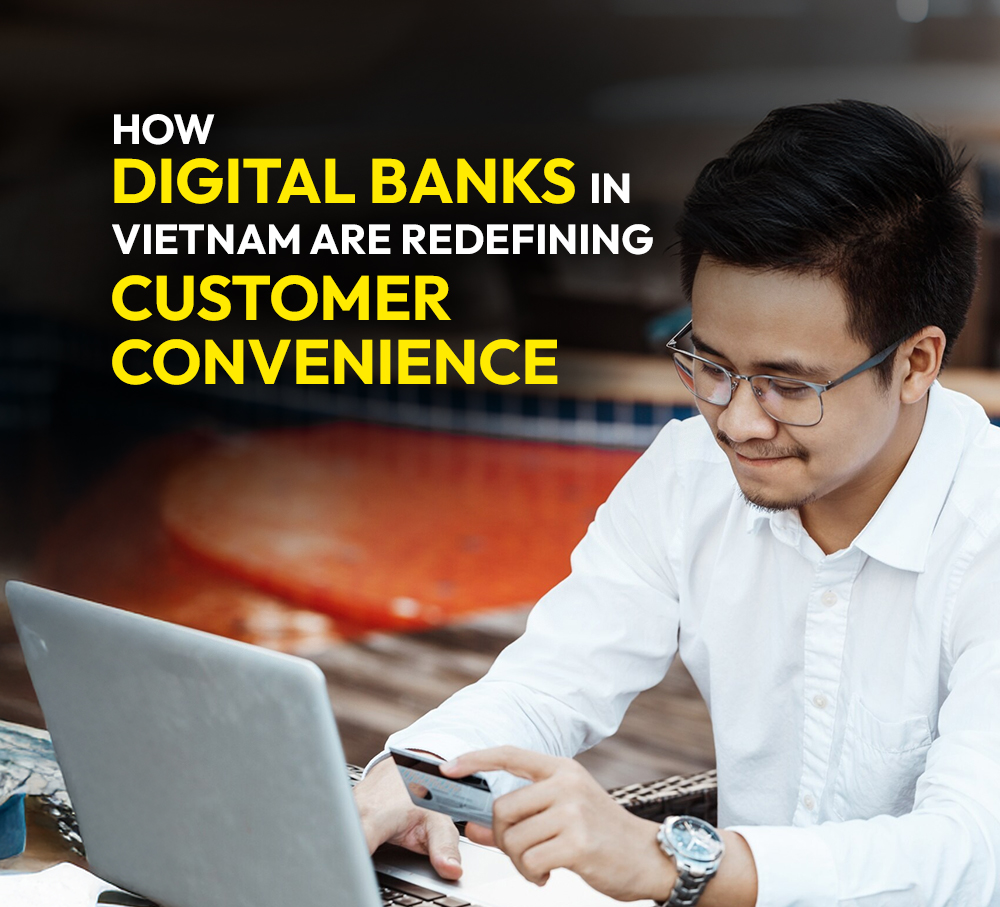
The shift towards instant payments, automated transfers, and smart, real-time spending tools has changed how people in Vietnam expect financial services to work. Features like biometric login, instant check-in, and built-in expense tracking have redefined what users expect from everyday banking, setting new standards for what counts as a basic financial service.
These changes have therefore pushed banks to rethink old legacy systems. This is where the concept of ‘digital transformation Vietnam’ gained force, opening the door for newer, more innovative models and financial services to emerge.
In retrospect, what is often grouped under the label “Digital banks Vietnam” shows complex banking tasks being reduced to fast, intuitive actions through stable, mobile-first platforms built for everyday use.
Here’s more you’ll want to know.
Digital-First Systems Built for Speed and Accuracy
Modern digital banks rely on mobile-first systems that eliminate delays and minimize the need for manual processes. Since these systems handle high transaction volumes without slowing down, users are able to manage their money with ease. As a result, many people turn to mobile banking Vietnam for simple tasks like checking bank balances or making daily transfers.
On one hand, smart back-end tools detect errors before they reach users; reducing risk and enabling safer operations. On the other, banks run updates seamlessly in the background, so users never lose access. This level of stability builds and shapes trust, keeping people increasingly engaged with smart banking features.
H2- Simple Access Across All Touchpoints
People in Vietnam increasingly want banking services that fit seamlessly into their daily routines. They expect quick access without the need for branch visits or lengthy forms. The most trending category, ‘Digital banks Vietnam,’ offers exactly that, through smart mobile apps and web tools – i.e., users can open accounts in minutes using digital IDs, uploading documents with simple camera scans, and having their data verified instantaneously. This eliminates waiting time and makes banking much more convenient.
Furthermore, mobile apps utilize clear layouts and large, intuitive icons, allowing users to reach core features immediately. The need for any extra steps are removed. The result is, quite naturally, a simple, clean, and effortless banking experience.
Real-Time Insights That Guide Daily Decisions
Smart tools help users track their money in real time. For instance, expense categories update instantly, and warn users when budgets are close to their limits, while ‘trends’ reveal where most of their money goes each month. Together, these features help users develop better financial habits.
This is proof of a major leap towards digital transformation in Vietnam – where people who once waited long hours for monthly statements, now received information almost immediately. It suffices to say that smart banking apps in the country act as daily guides that help users manage money proactively.
H2- Safer Systems Built on Multi-Layer Protection
Security is of vital importance in every financial concern, therefore, Digital banks in Vietnam rely on strong, robust protection systems to keep accounts safe – such as multi-factor authentication, device binding, and biometric checks, which reduce risks drastically. AI engines monitor unusual patterns, automatically freezing any suspicious activity.
Moreover, security alerts notify users of every login or device change, which builds trust and confidence. Such real-time monitoring therefore not only prevents fraud but also empowers users to be in control of their finances. This focus on safety supports the growth of the trending phenomenon popularly referred to as “Mobile Banking Vietnam” – given how its people consistently expect security alongside convenience.
Smart Automation for Common Services
Modern banks use automated workflows for tasks like bill payments, card updates, and loan checks. Users set the rules once, and the system takes over. Auto-pay ensures bills are cleared on time, while auto-save transfers money to savings when salaries are credited into accounts.
These small, consistent actions, alongside many more, help users build long-term financial value.
Automation is therefore a core part of smart banking across the region. By turning complex processes into simple, rule-based triggers, it enhances user convenience and integrates banking seamlessly into people’s everyday routines.
Faster Support Through AI and Trained Teams
As banking consistently moves online, support teams are now combining AI tools with human expertise to deliver fast and accurate banking assistance.
Users get quick, instant answers through chatbots while complex issues are escalated to the trained staff. This reduces waiting time by a large margin, ensuring users receive timely responses.
Teams also rely on unified dashboards that provide a single, cohesive view of user data, past enquiries, and real-time account information. With these tools, support staff can answer questions accurately and build trust by enhancing the overall user experience.
By streamlining support in this way, banks not only improve customer satisfaction but also reinforce engagement itself, encouraging active adoption of features like mobile banking, automated payments, and real-time alerts.
Growth Driven by User Needs
People want tools that work effortlessly – with fast, responsive banking, transparent choices, and a fair fee. Bringing ideas from theory to practice and turning the vision of inclusion to reality in the country might be given the mere title of “Digital Banks Vietnam” but it won’t be wrong to identify them as the beacons of progress in today’s evolving world.
The success of mobile banking in Vietnam therefore showcases a broader shift in habits; i.e., users prefer instant digital actions over arduous branch visits, and banks that understand this shift are actively redesigning better services.
Why Digital Convenience Matters for Vietnam’s Financial Future
Convenience drives access, and in retrospect, builds a financially inclusive state.
Digital accounts enable more people to access the formal financial system, while clear, intuitive interfaces help new users adapt faster. Smart budgeting tools encourage healthier, stronger money habits, and robust, secure systems protect both users and banks. Together, these services support the larger goals of digital transformation in Vietnam.
By focusing on tech-driven growth, banks can reach more people, reduce costs, and offer higher-quality services at scale. This strengthens the financial sector and fosters greater inclusivity, empowering more customers to participate in the digital economy.
As a result, over time, accessible digital banking helps shape and build a more resilient, efficient, and future-ready financial ecosystem.
Why We Promote Innovation Through WFIS
As Vietnam’s financial sector takes a decisive turn towards digital banking and next-gen financial ecosystems, the Chuỗi Đổi mới Tài chính Thế giới (WFIS) serves as a dedicated, focused platform for leaders and innovators from the entire financial spectrum – of both domestic and international scale – to converge.
The event is curated meticulously to bring together top C-suite decision-makers, regulatory leaders, heads of innovation, and industry strategists who design, implement, and scale new rules, systems, and opportunities across the financial ecosystem; in order to set the agenda for innovation, collaboration, and growth.
Here’s What the WFIS Offers
A Powerful Network
- Connect with 500+ decision-makers constituting c-suite leaders, regulatory experts, industry practitioners, technology innovators, and more.
- Engage with representatives from 100+ leading organizations across banking, insurance, fintech, and other key financial services.
- Hear cutting-edge insights from 40+ industry speakers sharing actionable strategies and real-world market perspectives.
- Explore breakthrough innovations from 25+ solution providers shaping the future of financial services.
Engage with Key Decision-Makers
- Gain direct access to buyers with strong purchasing power.
- A majority of the audience constitutes influential leaders from both domestic and international financial sectors.
Connect, Engage, Close
- Secure high-impact, one-on-one meetings with sponsors and pre-qualified buyers.
- Build clear and direct business links with potential business partners or client prospects.
Immersive Interactions
- Exclusive insights through panel sessions, fireside chats, and interactive discussions – featuring domestic and international experts sharing strategies, lessons, and real-world perspectives.
- A range of topics on Vietnam’s financial transformation – covering digital banking, AI adoption, open banking, fintech ecosystems, and cashless payment trends.
Recognition of Industry Excellence
- Celebration of pioneering leaders, professionals, and organizations shaping Vietnam’s financial services landscape with prestigious awards across key categories.
- Gain industry‑wide attention with extensive media exposure for excellence in the financial field.
Whether it is actionable insights, high-value partnerships, or recognition for innovation, the WFIS empowers businesses and professionals to stay ahead in a rapidly evolving industry.
With access to thought leaders, cutting-edge solutions, and a network of decision-makers, attendees leave informed and equipped to drive growth, shape strategy, and redefine the future of financial services in Vietnam and beyond.
Register Today!
Be part of WFIS 2026 – Vietnam, where leaders, innovators, and policymakers converge on a single, powerful platform.
Discover fresh ideas, impactful partnerships, and new growth opportunities shaping Vietnam’s digital financial future.
Event Details:
- Date: May 19–20, 2026
- Venue: Meliá Hanoi, Vietnam
Don’t miss your chance to connect, collaborate, and lead the next wave of digital finance in Vietnam!