


Vietnam’s financial sector has entered a period of strong modernization, supported by regulatory reforms, digital payment adoption, and rapid fintech expansion. Banks, insurance companies, and financial institutions are investing heavily in automation, cybersecurity, digital banking platforms, and data-driven decision systems.
According to the State Bank of Vietnam, more than 70% of banking transactions are now conducted digitally, while the country’s fintech ecosystem has grown to 200+ companies across payments, lending, and wealth management.
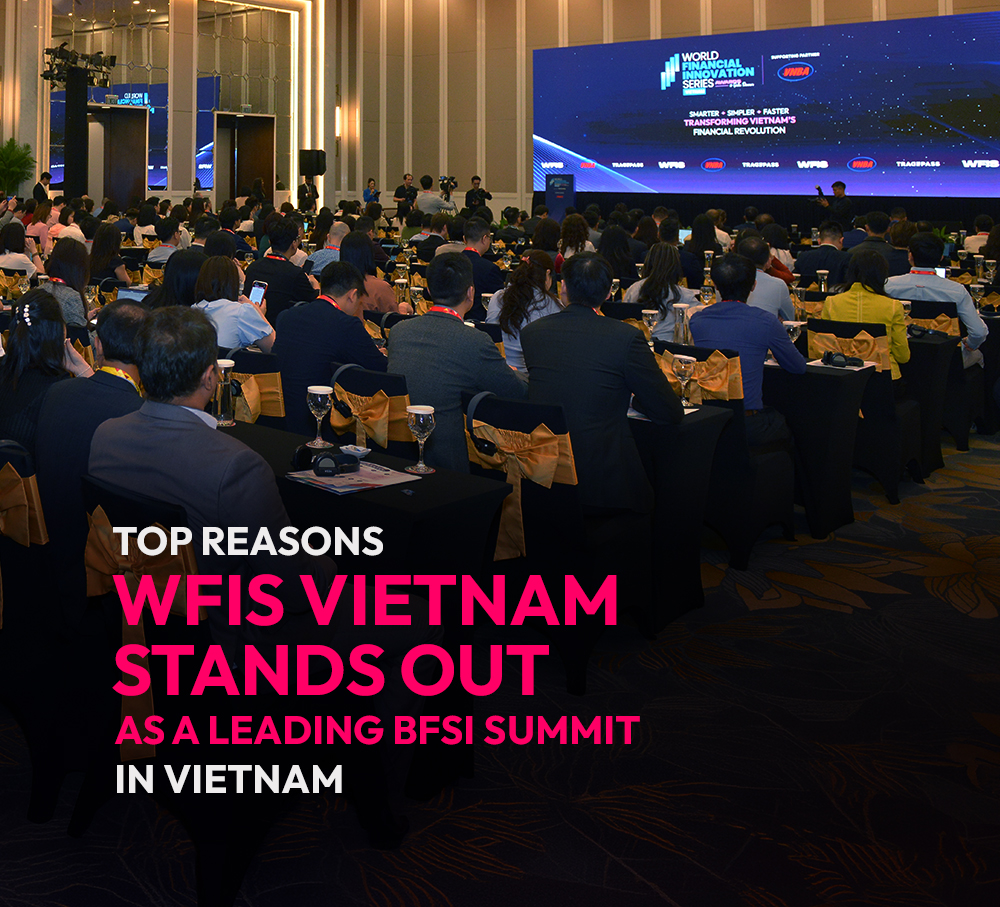
Within this active environment, the WFIS Vietnam platform has emerged as a major BFSI summit Vietnam leaders closely follow. Designed for executives, decision-makers, and technology providers, the event offers discussions, partnerships, and business opportunities that help shape the future of financial services in the region.
Vietnam’s Rapid Financial Sector Growth Creates a Strong Foundation
Vietnam has become one of Southeast Asia’s fastest-growing financial markets. Several factors contribute to this momentum:
- A digital-first population: Over 77% internet penetration and high smartphone usage
- Government-backed initiatives: Digital transformation programs aimed at modernizing banking and financial infrastructure
- Growing fintech investment: Vietnam attracted significant fintech funding in recent years, particularly in payments and digital lending
- A rising middle class: Increasing demand for digital banking, wealth management, and insurance services
This momentum has made Vietnam a strategic destination for finance industry events that bring together regulators, banks, fintech startups, and technology providers. WFIS Vietnam positions itself at the center of these conversations by creating a structured environment where leaders can exchange ideas, discuss regulatory changes, and identify investment opportunities.
For delegates and C-suite executives, this context means the summit reflects real market priorities rather than theoretical discussions.
High-Level Participation from Regulators and Industry Leaders
One of the most notable aspects of WFIS Vietnam is the presence of influential decision-makers. The summit attracts:
- Senior banking executives
- Fintech founders
- Government representatives and regulators
- CIOs, CTOs, and digital banking leaders
- Policy makers shaping financial innovation frameworks
Vietnam’s financial sector continues to encourage collaboration between regulators and private institutions. Events like WFIS provide a structured platform where regulatory updates, digital banking frameworks, and financial inclusion programs are discussed directly with the people implementing them.
For sponsors and solution providers, access to these high-level professionals creates meaningful opportunities for strategic partnerships. Instead of broad industry networking, participants connect directly with leaders responsible for technology investments and digital banking initiatives.
This strong participation helps the BFSI summit Vietnam stand apart from general fintech conferences.
A Focused Agenda Built for the BFSI Ecosystem
Unlike broad technology conferences, WFIS Vietnam maintains a clear focus on banking, financial services, and insurance (BFSI) innovation.
The agenda typically addresses several key themes shaping Vietnam’s financial sector:
Digital Banking and Financial Inclusion
Vietnam’s government aims to expand access to financial services, especially in rural areas. Digital banking platforms and mobile financial services are helping reach underserved communities.
Cybersecurity and Fraud Prevention
As online transactions increase, banks are investing heavily in fraud detection systems, authentication technologies, and cybersecurity frameworks.
AI and Data in Banking
Financial institutions are using data analytics and artificial intelligence to improve credit scoring, customer experience, and risk management.
Open Banking and Fintech Collaboration
Partnerships between banks and fintech companies continue to grow as institutions integrate APIs, payment innovations, and embedded finance models.
For delegates and decision-makers, this focused program ensures that every discussion tackles real operational challenges and opportunities within the financial sector.
Business Networking That Drives Real Partnerships
A defining characteristic of the WFIS Vietnam platform is its emphasis on business connections rather than only presentations.
Participants typically include:
- Banks exploring new technology partners
- Fintech startups seeking market expansion
- IT solution providers offering infrastructure and security tools
- Consultants and financial advisory firms
- Venture capital firms interested in fintech growth
Through networking sessions, panel discussions, and exhibition spaces, attendees can hold direct conversations about potential collaborations.
For sponsors, this creates strong brand visibility and aids them in getting in front of the financial institutions who’re actively looking for technology partners. Quite naturally, for delegates, it means access to technology partners that support digital banking, payment systems, compliance solutions, and data analytics platforms.
This structure helps transform the finance industry event into a platform where conversations often lead to long-term business partnerships.
A Platform Connecting Vietnam with the Global Financial Innovation Community
Vietnam’s financial transformation does not happen in isolation. International technology providers and consulting firms are increasingly participating in the country’s modernization efforts.
WFIS Vietnam acts as a bridge connecting the local financial ecosystem with global expertise.
Influential speakers and companies contribute insights on topics such as:
- Cross-border payments and remittance technology
- Digital identity systems
- Global regulatory trends in fintech
- AI-driven financial services
- Cloud infrastructure for banking
This global participation ensures the fintech festival reflects both regional priorities and international financial innovation practices.
For Vietnamese banks and financial institutions, it offers exposure to technologies and strategies already implemented in mature markets. For global companies, the event offers a direct gateway into one of Southeast Asia’s most promising financial markets.
Strong Value for Delegates, Sponsors, and Industry Leaders
Another reason WFIS Vietnam stands out among BFSI summit Vietnam platforms is the clear value it offers to each stakeholder group.
Delegates
Executives gain insights from regulators, technology experts, and banking leaders while exploring strategies that support digital banking growth.
C-Suite Leaders
Strategic discussions help senior executives assess investment priorities, partnerships, and emerging financial technologies.
Sponsors
Technology providers receive direct exposure to financial institutions actively seeking solutions for cybersecurity, payments, data analytics, digital banking platforms and more.
Fintech Startups
Startups gain visibility among banks and investors looking for innovative products that support financial inclusion and digital services.
This balanced ecosystem ensures that every participant, whether a policymaker, technology vendor, or financial executive, finds tangible value from the summit.
Join World Financial Innovation Series (WFIS) Vietnam 2026
World Financial Innovation Series (WFIS) Vietnam 2026 will take place on 19–20 May 2026 at Meliá Hanoi, Vietnam. The event will bring together top industry icons, government officials, and policy makers along with banking leaders, fintech innovators, and technology providers.
Secure your participation and connect with the leaders driving the future of banking and fintech in Vietnam.